

Quick Answer
EBOO (Extracorporeal Blood Oxygenation and Ozonation) is an intensive form of ozone therapy in which blood is drawn out, passed through a filter and an ozone-oxygen circuit, and returned to the body. In India, a single session typically costs ₹45,000 to ₹80,000.
Here is the part most websites leave out: the evidence for EBOO is preliminary. As of 2026, the published research consists of one small controlled trial from 2005, isolated case reports, and technique papers.
No large randomised controlled trial has been completed. No national drug regulator has approved ozone for general therapeutic use, and the US FDA classifies ozone as a toxic gas with no established medical application.
EBOO is not a substitute for treatment of any diagnosed condition. If you are considering it, this guide explains what it actually is, what it costs, what the research shows, and what to ask before you pay for a session.
What is EBOO Blood Cleansing Therapy?
EBOO stands for Extracorporeal Blood Oxygenation and Ozonation. “Extracorporeal” simply means outside the body.
The technique was developed in Italy from around 1990 as a way to expose far more blood to ozone than conventional methods allow.
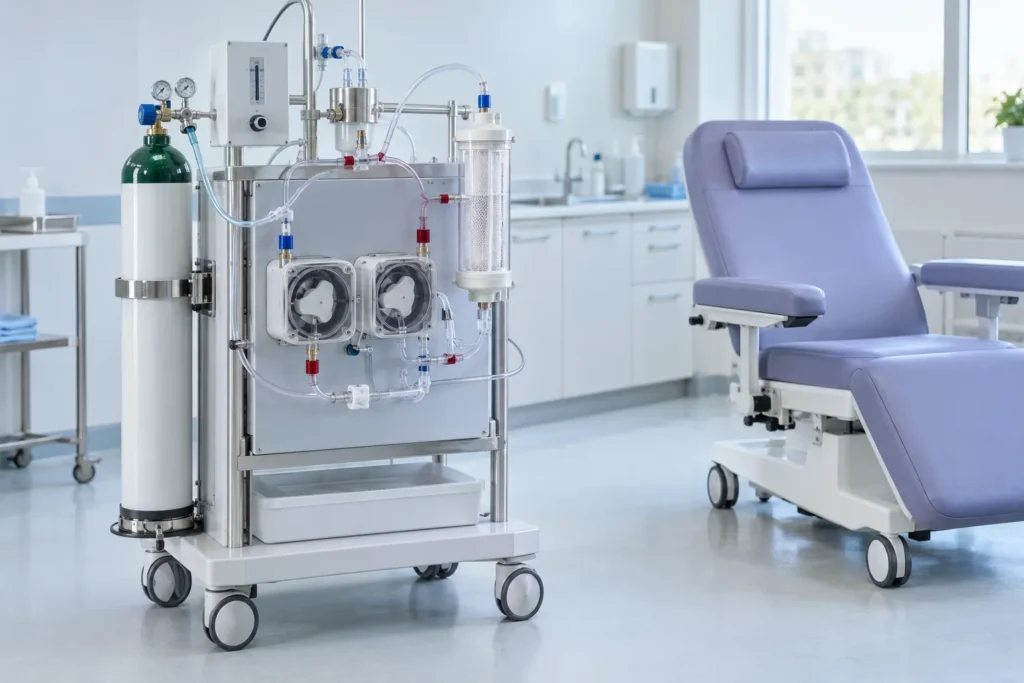
Standard major autohemotherapy (MAH) treats roughly 200 ml of blood per session. EBOO circuits are designed to process substantially larger volumes – early published work described treating up to 4,800 ml of heparinised blood over an hour of extracorporeal circulation.
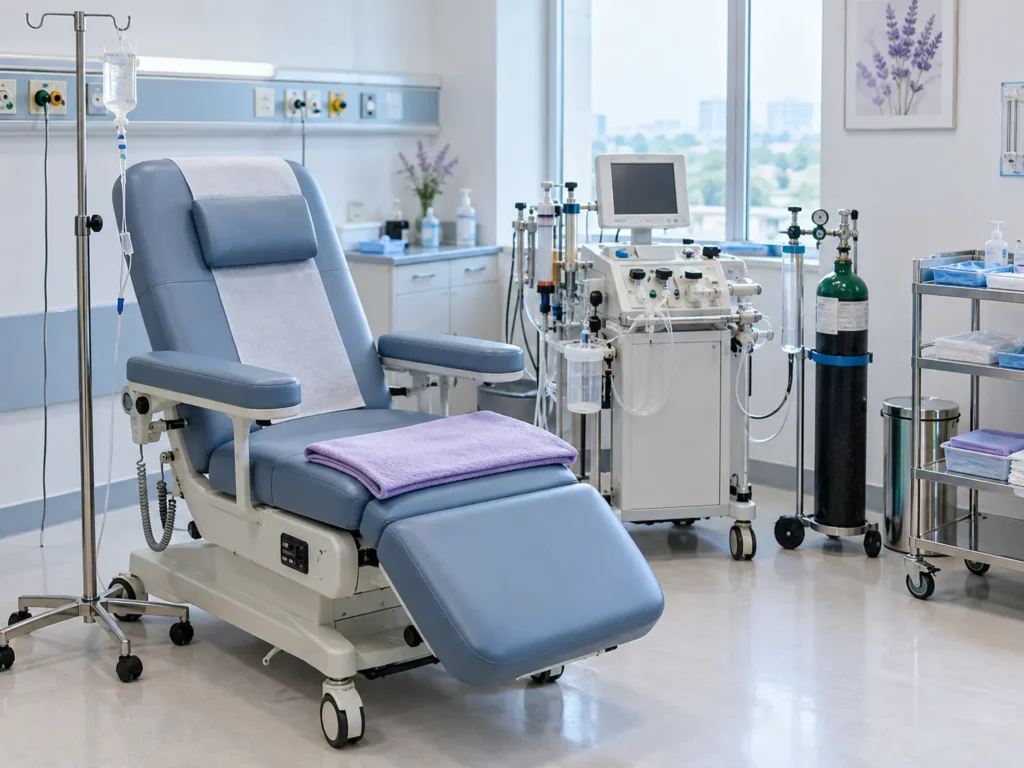
The setup resembles dialysis equipment, but the purpose is different. Dialysis removes nitrogenous waste and excess fluid in kidney failure, using clinically validated clearance targets.
EBOO passes blood through a gas-exchange membrane in contact with an oxygen-ozone mixture. The two are not medically equivalent, and EBOO should not be described as a form of dialysis.
You may see EBOO marketed under names like blood ozonation therapy, ozone blood purification, blood cleansing therapy, or ozone dialysis. These refer to the same underlying procedure.
PubMed — Di Paolo et al., “Extracorporeal blood oxygenation and ozonation: clinical and biological implications of ozone therapy”
How Does the EBOO Procedure Work?
A typical session follows these steps:
- Pre-treatment assessment. Blood counts, coagulation profile, and a review of current medications. Anyone with a bleeding disorder, severe anaemia, or unstable cardiac status should not proceed.
- Vascular access. Two IV lines are placed — one to draw blood, one to return it.
- Anticoagulation. Heparin is added to prevent clotting inside the circuit. This is a meaningful part of the risk profile, not an incidental detail.
- Circulation and ozonation. Blood passes through a filter and a membrane where it contacts a controlled oxygen-ozone mixture, then returns to the body in a closed loop.
- Monitoring and recovery. Blood pressure and pulse are tracked throughout, with a short observation period afterwards.
Sessions generally run 60 to 120 minutes. Clinics commonly recommend courses of multiple sessions rather than a single treatment — the original Italian protocol used 14 sessions over seven weeks.
A note on the circuit: because this procedure involves an extracorporeal blood circuit, sterility and single-use disposables are non-negotiable. Documented harms from ozone therapy internationally have included transmission of hepatitis C. Ask specifically what is single-use and what is reprocessed.
What Does the Research Actually Show?
This is the section that should decide whether EBOO is right for you – so here it is in full, without spin.
| Evidence type | What exists | What it means |
|---|---|---|
| Randomised controlled trials | One, from 2005: 28 patients with peripheral artery disease, EBOO vs. IV prostacyclin | Small, single-centre, over 20 years old, one condition only |
| Case reports | Individual patients, including a 2025 report on urinary toxin levels in an 88-year-old with chronic anaemia | Cannot establish cause and effect; the authors noted there was no control for ongoing exposure |
| Technique/mechanism papers | Several, describing feasibility and blood chemistry changes | Show the procedure can be done — not that it improves health outcomes |
| Large multi-centre RCTs | None | The standard of evidence required for approval has not been met |
The 2005 trial did report significantly better regression of skin lesions in the EBOO group compared with prostacyclin, along with improvements in pain and quality-of-life measures.
That is a real finding and worth acknowledging. It is also 28 patients, in one condition, in one centre, without independent replication in the two decades since.
For everything else EBOO is marketed for – chronic fatigue, autoimmune disease, “detoxification,” anti-ageing, long COVID, general wellness – there is no controlled human trial evidence. Claims that EBOO removes heavy metals, mycotoxins, or “toxins” from the body rest on individual case reports, not trials.
PubMed — Di Paolo et al., controlled trial in peripheral artery disease
One narrow area with formal support
Ozone therapy has received a low-level clinical recommendation (grade 1C) from the American Society of Colon and Rectal Surgeons for chronic radiation proctitis, a complication of pelvic radiotherapy. This is a specific, limited indication — and it is not EBOO. It does not extend to blood ozonation for general wellness.
Regulatory Status – What Patients Should Know
United States. The FDA prohibits medical uses of ozone in any condition lacking proof of safety and effectiveness. Under 21 CFR 801.415, ozone is classified as a toxic gas with no known useful medical application in specific, adjunctive, or preventive therapy.
No ozone-generating device has FDA approval for therapeutic use in humans.
India. Medical devices are regulated by the Central Drugs Standard Control Organisation (CDSCO) under the Medical Devices Rules, 2017.
Ozone therapy occupies an unregulated space here – it is offered by integrative and wellness clinics without a specific approval pathway for the indications it is marketed for. Unregulated is not the same as approved. It means no authority has assessed the claims being made.
Practically, this means: no insurer will cover it, no standard of care governs how it is delivered, and quality varies enormously between clinics.
US FDA – 21 CFR 801.415 ozone classification Cleveland Clinic – Ozone Therapy: What It Is, Uses and Side Effects
EBOO Therapy Cost in India
| Item | Typical range in India |
|---|---|
| Single EBOO session | ₹45,000 – ₹80,000 |
| Multi-session package (4–6 sessions) | Often discounted; confirm per-session rate |
| Pre-treatment blood work | ₹2,000 – ₹6,000 |
| Specialist consultation | ₹500 – ₹2,000 |
| Insurance coverage | None – fully out of pocket |
Verify before publishing: replace this range with Global Healthcare India’s actual current pricing. The previous version of this page carried two conflicting figures, which is worth correcting permanently.
Cost varies with city, equipment, disposables used, and whether physician assessment is genuinely included. A meaningful price should cover pre-treatment review of your diagnosis, medications, coagulation risk, and vascular access – not just machine time.
Because a full course can run into several lakhs with no insurance support and no guarantee of benefit, treat this as a significant discretionary health expense and budget accordingly.
Risks, Side Effects, and Who Should Avoid EBOO
Common, usually mild
- Bruising, swelling, or discomfort at IV sites
- Temporary fatigue or light-headedness
- Transient blood pressure changes
Serious, less common
- Air or gas embolism — a recognised risk whenever gas is introduced into a blood circuit
- Bleeding complications from heparin anticoagulation
- Infection or bloodborne transmission if sterility is breached; hepatitis C transmission has been documented with ozone therapy internationally
- Ozone-induced encephalopathy — central nervous system toxicity reported in the literature
- Haemolysis and oxidative stress from ozone exposure to blood components
Serious adverse events from ozone therapy, including deaths, have been reported.
You should not have EBOO if you have
- Pregnancy
- G6PD deficiency (favism) — ozone exposure carries a specific haemolysis risk
- Bleeding disorders or ongoing anticoagulant therapy
- Severe anaemia
- Unstable cardiac disease or recent myocardial infarction
- Hyperthyroidism
- Active severe infection
Tell your treating doctor — not just the clinic selling the therapy — before booking.
Questions to Ask Any Clinic Before Booking
- Which qualified doctor performs and supervises the session, and what is their registration number?
- What ozone concentration and blood volume does your protocol use?
- Which components are single-use, and how is the circuit sterilised?
- What emergency equipment and protocols are in place for embolism or an anaphylactic reaction?
- What outcome will we measure, on what timeline, to decide whether this is working?
- What is the total cost for the full recommended course, all-inclusive?
- What is the evidence for my specific condition – can you share it?
A clinic that answers these directly is a better sign than one that answers with testimonials.
Evidence-Based Alternatives Worth Discussing First
Most people considering EBOO are dealing with fatigue, chronic inflammation, chronic pain, or unexplained symptoms. Those deserve a proper diagnostic workup before an expensive experimental procedure.

- Persistent fatigue or brain fog: diagnostic and laboratory services covering thyroid function, ferritin, B12, vitamin D, HbA1c, and a sleep assessment identify a treatable cause in a large share of cases.
- Chronic inflammation and metabolic symptoms: structured metabolic and lifestyle disease care — assessment plus lifestyle intervention — has strong outcome data.
- Chronic joint or back pain: established pain management options include physiotherapy, image-guided injections, and PRP therapy, all with a clearer evidence base than blood ozonation.
- Unexplained symptoms generally: start with an internal medicine evaluation rather than a treatment in search of a diagnosis.
None of this means EBOO cannot be discussed. It means it should be discussed after a diagnosis, not instead of one.
The Honest Bottom Line
EBOO is a real procedure with a plausible mechanism and a genuinely thin evidence base. One small trial from 2005 showed benefit in peripheral artery disease. Beyond that, what exists is case reports and marketing.
If you have a diagnosed condition, get standard treatment first — EBOO should never delay or replace it. If you are considering EBOO as a complementary option, go in understanding that you are paying a substantial out-of-pocket sum for a therapy whose benefit has not been established, with real procedural risks attached.
At Global Healthcare India, Pataudi, our position is that patients make better decisions with complete information than with promises. If you want an unbiased assessment of whether EBOO — or something with stronger evidence — fits your situation, our physicians will tell you honestly.
Frequently Asked Questions
Q. Is EBOO therapy approved in India?
No regulator has approved ozone therapy for general therapeutic use in India. CDSCO regulates medical devices under the Medical Devices Rules, 2017, but ozone therapy is offered in an unregulated space by integrative and wellness clinics. It is not part of any standard treatment protocol.
Q. How much does EBOO therapy cost in India?
A single session typically costs ₹45,000 to ₹80,000, with a full course usually requiring multiple sessions. Health insurance does not cover it, so the entire cost is out of pocket.
Q. Is EBOO the same as dialysis?
No. The equipment looks similar, but dialysis removes waste products and excess fluid in kidney failure against validated clinical targets. EBOO exposes blood to an oxygen-ozone mixture. EBOO does not perform the functions of dialysis and cannot replace it.
Q. Does EBOO remove toxins or heavy metals from the blood?
This claim comes from individual case reports, not controlled trials. A 2025 case report described falling urinary toxin levels in one 88-year-old patient, but its authors noted there was no control for ongoing exposure. One patient cannot establish that a treatment works.
Q. Is EBOO therapy safe?
Reported side effects range from mild IV-site bruising to serious events including air embolism, bleeding from anticoagulation, bloodborne infection, and ozone-induced encephalopathy. Deaths from ozone therapy have been reported. Risk is lower in a properly equipped clinical setting with single-use disposables, but it is not zero.
Q. Can EBOO cure cancer, diabetes, or autoimmune disease?
No. There is no evidence supporting EBOO as a treatment for any of these conditions, and using it in place of established care can cause serious harm. Anyone claiming otherwise is making a claim the research does not support.
Q. How many EBOO sessions are needed?
Protocols vary widely between clinics. The original published Italian protocol used 14 sessions over seven weeks. There is no evidence-based standard, which is itself worth noting — ask any clinic to justify its recommended number