
Frozen Shoulder Treatment in Gurgaon - Regain Movement, Without Surgery
Can't reach behind your back, comb your hair, or lift your arm overhead? Our doctor-led, non-surgical protocols loosen the joint and relieve pain - without going under the knife.
Do Your Symptoms Match Frozen Shoulder?
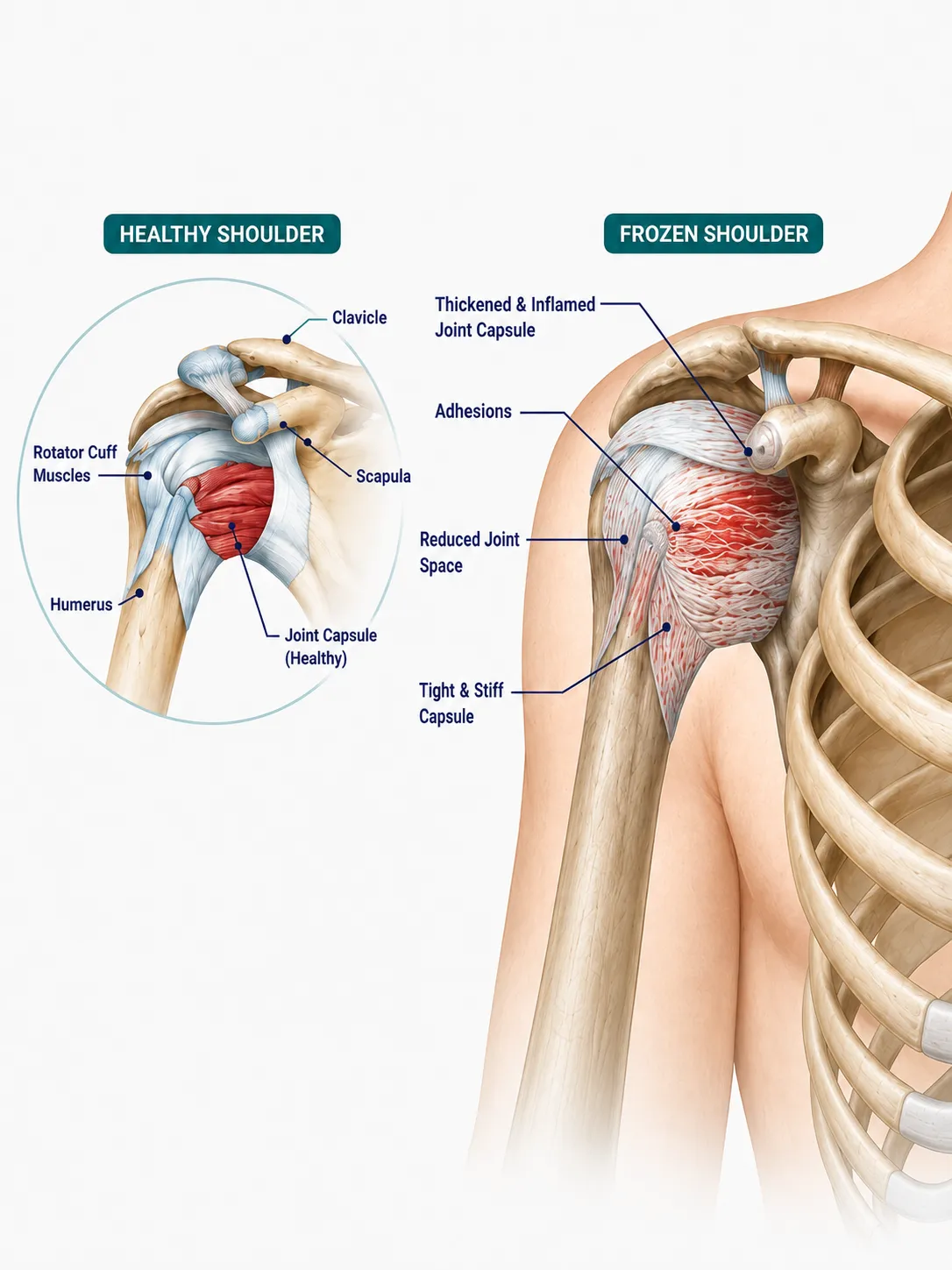
Frozen shoulder (adhesive capsulitis) happens when the tissue around your shoulder joint thickens and tightens, gradually limiting movement. Common warning signs include:
Persistent dull ache - often worse at night or when lying on the affected side.
Gradual stiffness - the shoulder gets harder to move week by week.
Trouble reaching overhead or behind your back - combing hair, hooking a bra, reaching a top shelf.
Difficulty with daily tasks - dressing, driving, or sleeping on that side.
Restricted range of motion - in every direction, not just one movement.
Slow, staged progression - pain first, then stiffness, then gradual improvement.
⚠️ Frozen shoulder can take months to years if untreated. Early treatment shortens recovery time significantly.
Talk to a Specialist TodayWhat's Actually Causing Your Frozen Shoulder?
Frozen shoulder often develops without an obvious injury. Knowing your risk factors helps us build the right treatment plan.
Immobilization
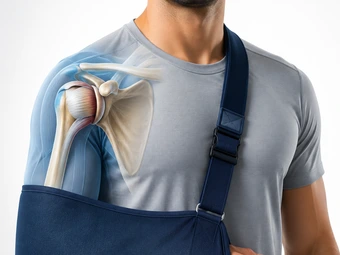
Keeping the shoulder still for long periods after injury or surgery can lead to scar tissue and adhesions inside the joint.
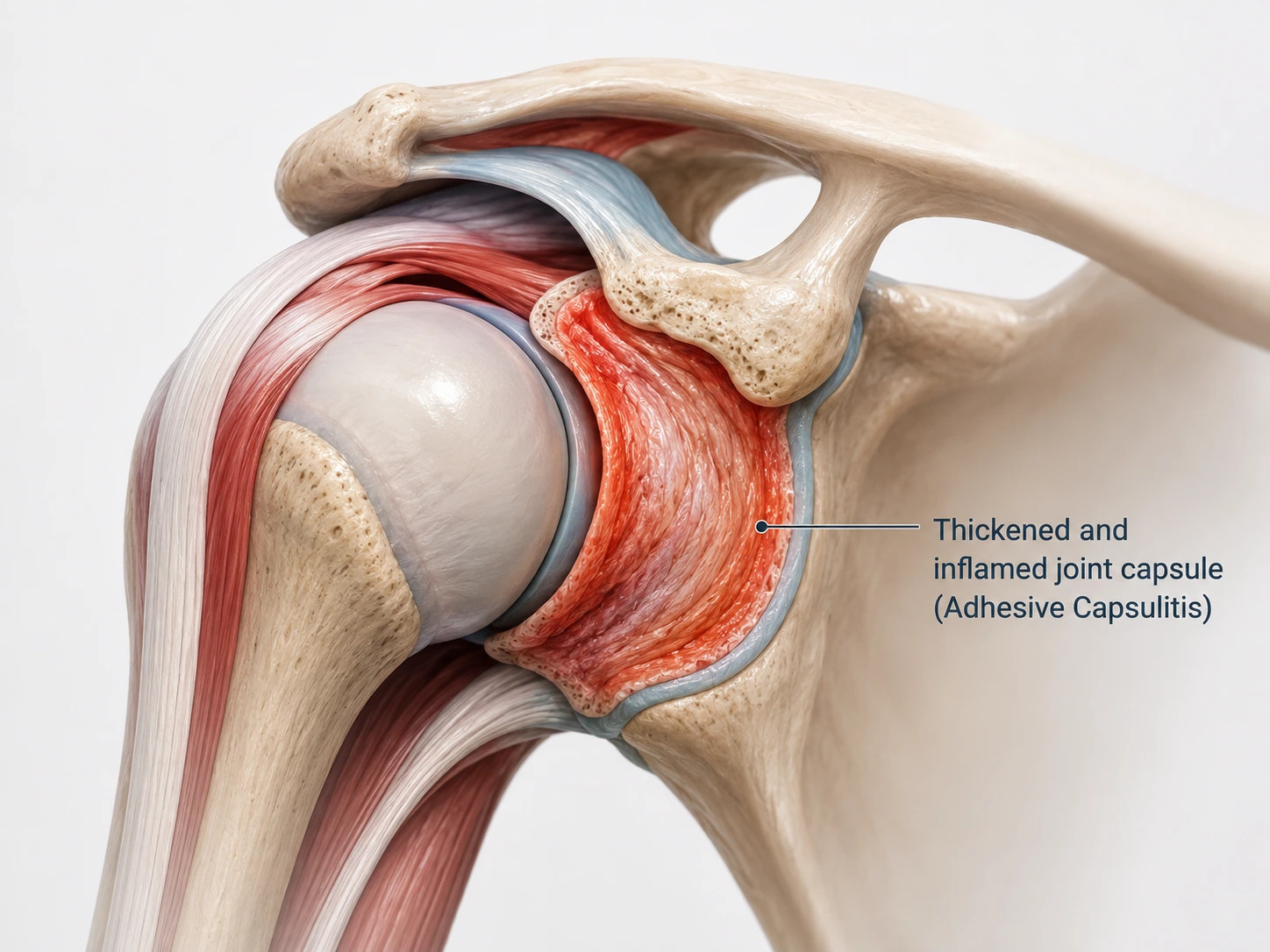
Inflammation
Inflammation of the joint capsule - often linked to diabetes or thyroid disorders - can trigger the condition.

Age & Gender
Most common between ages 40–60, and more frequent in women than men.
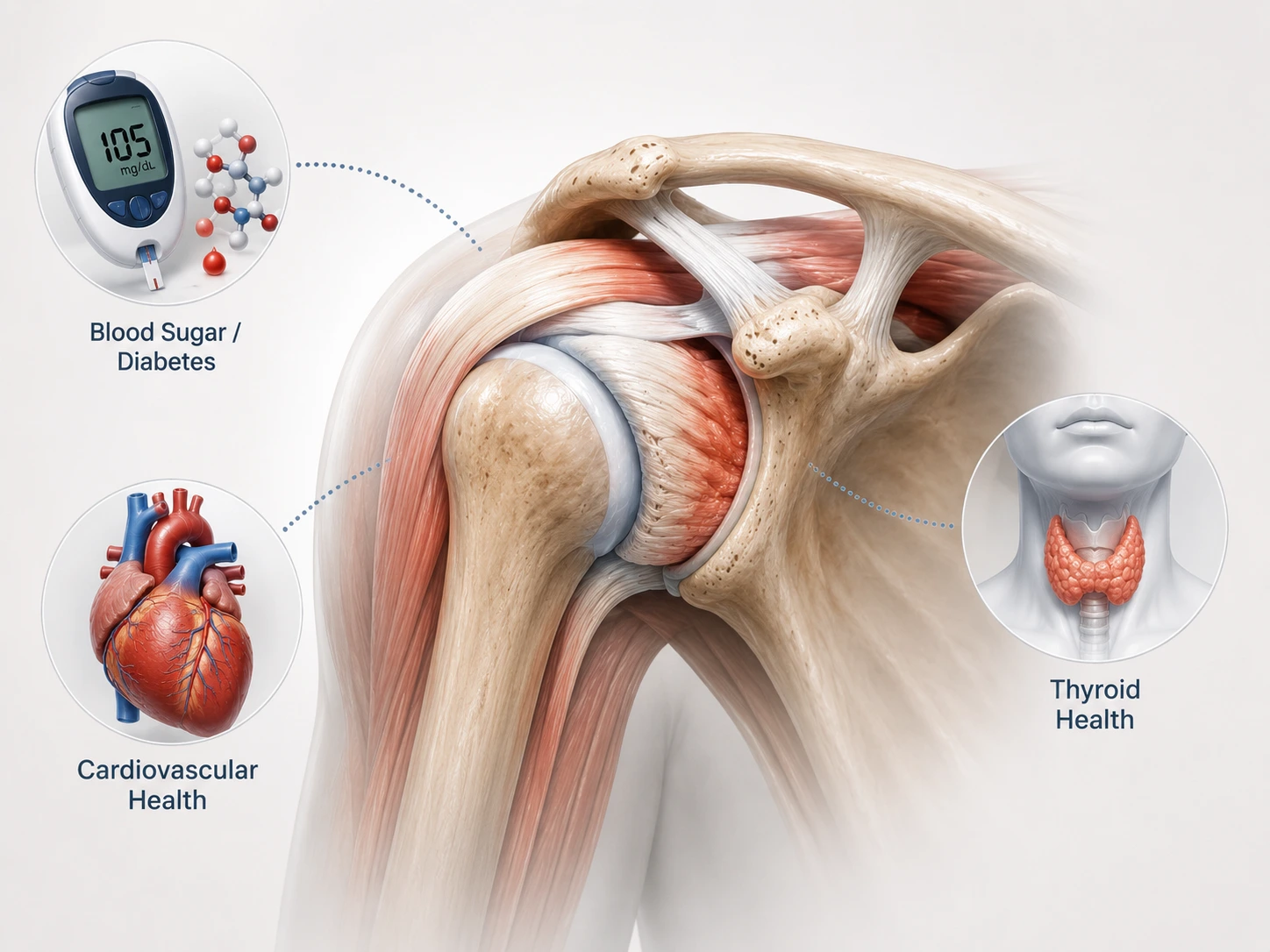
Systemic Diseases
Diabetes, cardiovascular disease, and autoimmune conditions raise your risk of developing it.
The 3 Stages of Frozen Shoulder
Frozen shoulder typically moves through three stages. Treating it early - during the freezing stage - usually gives the fastest, most complete recovery.
1. Freezing Stage
Pain gradually increases and shoulder movement starts becoming limited. Can last 6 weeks to 9 months.
2. Frozen Stage
Pain may ease slightly but stiffness is at its worst - daily tasks become difficult. Lasts 4 to 6 months.
3. Thawing Stage
Movement and strength gradually return. Recovery can take 6 months to 2 years without proper treatment.
Non-Surgical Frozen Shoulder Treatment Options
Most patients recover well with conservative care. We combine these based on your stage and severity:
Physiotherapy
Guided stretching and mobility exercises that gradually restore range of motion in the shoulder.
Learn more →DSCB Injection
A targeted nerve-block technique that reduces pain quickly and allows faster progress with therapy.
PRP Therapy
Platelet-rich plasma injections that support natural healing of the inflamed joint capsule.
Learn more →Ozone Therapy
Minimally invasive ozone injections that reduce inflammation around the shoulder capsule.
Learn more →Pain-Relief Injections
Targeted injections for fast relief during the painful freezing stage.
Personalized Recovery Plan
A staged home-exercise and follow-up plan reviewed at each visit as mobility improves.
From First Visit to Full Movement - What to Expect
Consultation & Diagnosis
A physical exam and imaging review to confirm the stage and rule out other shoulder problems.
Personalized Treatment Plan
A protocol built around your stage, pain level and daily needs - not a fixed package.
Guided Therapy Sessions
Physiotherapy and/or injections, with progress checked and adjusted at each visit.
Recovery & Prevention
A maintenance plan - stretching, posture, activity - so mobility stays for the long run.
Dr. Sunil Saini

Dr. Sunil Saini
With over two decades of experience, Dr. Sunil Saini specializes in non-surgical management of shoulder and joint pain - using DSCB injections, PRP, and ozone therapy as effective alternatives to surgery.
- Fellowship-trained in pain management, ozone therapy & regenerative injections
- Previously associated with Fortis Hospital Gurgaon, CK Birla Hospital & Apollo Cradle
- Personally reviews every diagnostic scan before finalizing a treatment plan
See Real Treatments & Patient Recovery Stories
Watch Dr. Sunil Saini explain Frozen Shoulder, advanced non-surgical treatment options, and real patient recovery journeys from our official YouTube channel.
Frozen Shoulder Treatment Explained
Dr. Sunil Saini explains the causes, symptoms, and advanced non-surgical treatment options.
Non-Surgical Frozen Shoulder Care
Learn how regenerative therapies and rehabilitation can help restore shoulder movement without surgery.
Real Patient Recovery Journey
See how patients regained shoulder mobility and returned to their daily activities after treatment.
What Our Patients Say
"For months, I couldn't raise my arm to comb my hair or even wear a shirt without severe shoulder pain. I was afraid I'd need surgery. After starting treatment and following the physiotherapy plan, my pain gradually reduced, and I regained my shoulder movement. Today, I can do my daily activities comfortably again."
"The stiffness in my shoulder had become so bad that I couldn't sleep on one side or lift my hand above my head. Dr. Sunil Saini explained my condition in simple words and recommended a non-surgical treatment plan. Within a few weeks, I noticed a significant improvement in both pain and movement. I'm thankful for the care and guidance throughout my recovery."
"I had almost accepted that the pain and stiffness would never go away. Every small task—from driving to picking up my granddaughter—had become difficult. The treatment gave me hope, and with regular therapy, my shoulder gradually became flexible again. I'm finally back to living without constant pain, and I couldn't be happier."
Frozen Shoulder - Frequently Asked Questions
What is frozen shoulder?
Can frozen shoulder be treated without surgery?
How long does frozen shoulder last?
What is the fastest way to relieve frozen shoulder pain?
When should I see a doctor for shoulder stiffness?
Where can I get frozen shoulder treatment near Gurgaon?
Don't Let a Frozen Shoulder Limit Your Day
Book a consultation and get a clear diagnosis + treatment plan - most patients are seen within the week.