
Quick answer: The top limb lengthening surgeons in 2026 are orthopaedic surgeons who perform this surgery every year, are trained in both internal lengthening nails and external frames, and work in hospitals with full rehabilitation support. Well-known names include Dr. Sunil Saini (India), Dr. Dror Paley, Dr. S. Robert Rozbruch and Dr. Austin Fragomen (USA), Prof. Augustin Betz (Germany), Dr. Jean-Marc Guichet (France, Italy and UK), Prof. Yuksel Yurttas (Turkey) and Dr. Donghoon Lee (South Korea).
Limb lengthening surgery is sought for two very different reasons: to treat a real difference in leg length or a bone deformity, and to increase height by choice (cosmetic or stature lengthening). Whichever applies to you, the surgeon you choose matters more than any other decision.
This guide explains how to judge a surgeon, lists well-known limb lengthening surgeons in North America, Europe and Asia, and compares the techniques they use, with honest information on recovery, risks and cost.
What is limb lengthening surgery?
Limb lengthening surgery (distraction osteogenesis) is an orthopaedic procedure in which a bone, usually the thigh bone (femur) or shin bone (tibia), is cut and then pulled apart very slowly using an internal nail or an external frame.
New bone forms in the gap, and once it hardens, the limb is permanently longer. Surgeons use it to correct a limb length discrepancy, straighten deformed bones and, in selected adults, increase height. You can see each treatment phase on our page on limb lengthening surgery in Gurugram.
How we chose the surgeons in this guide
Global Healthcare India publishes this guide, and our own surgeon, Dr. Sunil Saini, is included in it. We have listed him alongside surgeons from other centres, using publicly available information from hospital websites, professional profiles and published research.
We did not rank the surgeons, and no one listed paid to be included. Dr. Saini appears first because this is our hospital’s guide; the order is not a ranking. Case numbers are what each centre reports about itself. We could not verify them independently, so treat them as a starting point for your own questions.
Limb lengthening surgeons at a glance
| Surgeon | Centre and location | Best known for | Main techniques |
|---|---|---|---|
| Dr. Sunil Saini | Global Hospital & Trauma Centre, Pataudi, Gurugram, India | Cosmetic lengthening, limb reconstruction | LON, Ilizarov, PRECICE |
| Dr. Dror Paley | Paley Orthopedic & Spine Institute, West Palm Beach, USA | Complex reconstruction, cosmetic stature lengthening | PRECICE, external frames |
| Dr. S. Robert Rozbruch | Hospital for Special Surgery, New York, USA | Founder of the HSS limb lengthening and complex reconstruction service | Internal nails, external fixation |
| Dr. Austin Fragomen | Hospital for Special Surgery, New York, USA | Chief of the HSS limb lengthening service (since 2026), deformity correction, bone transport | Internal nails, external fixation |
| Dr. Christopher Iobst | Nationwide Children’s Hospital, Columbus, USA | Children’s limb deformities | Internal and external methods |
| Dr. Kevin Debiparshad | LimbplastX Institute, Las Vegas, USA | Cosmetic limb lengthening | Internal magnetic nails |
| Prof. Augustin Betz | Betz Institute / Becker Betz Institute, Germany | Inventor of the BETZBONE nail | BETZBONE |
| Dr. Jean-Marc Guichet | France, Italy and UK | Inventor of the Guichet Nail | Guichet Nail, PRECICE |
| Prof. Yuksel Yurttas | Esencan International Hospital, Istanbul, Turkey | Cosmetic and reconstructive lengthening | LON, Fitbone, PRECICE |
| Dr. Donghoon Lee | DALRI, South Korea | Limb lengthening and deformity correction | PRECICE, LON |
What should you look for in a limb lengthening surgeon?
- Qualification and training: Look for a surgeon certified in orthopaedic surgery by a recognised board in their country, such as the American Board of Orthopaedic Surgery, or, in India, an MS or DNB in Orthopaedics with registration under the National Medical Commission. Extra fellowship training in limb reconstruction, deformity correction or trauma is a strong sign of focus.
- Yearly volume and experience: Ask how many limb lengthening surgeries the surgeon performs each year, and how many were for your condition. Experience matters: in the large systematic review discussed in the risks section below, studies from centres reporting more than 40 patients had fewer complications per lengthened bone (30%) than studies with fewer than 20 patients (49%). A surgeon who also handles repeat surgeries and complications has seen what can go wrong and knows how to fix it.
- The hospital behind the surgeon: The centre should have modern imaging, 24-hour emergency support, an ICU and physiotherapy on site. Limb lengthening needs months of follow-up, so the team matters as much as the operation.
- Honest talk about risk: A good surgeon explains complications, how often treatment fails and the chance of a second surgery. Be careful with anyone who promises a fixed height, a “100% success rate” or a very low price without details.
- A written plan and cost: You should get the technique, the number of surgeries (including implant removal), hospital stay, physiotherapy and follow-up in writing.
Renowned limb lengthening experts in Asia
Dr. Sunil Saini, Global Hospital & Trauma Centre, Pataudi, Gurugram
Dr. Sunil Saini is the Head of Orthopaedics at Global Hospital & Trauma Centre, Pataudi, Gurugram, and a visiting consultant at Navayu – Spine & Joint Care, Sector 83, Gurugram. He completed his MBBS and MS in Orthopaedics at Assam Medical College, Dibrugarh.
His work covers cosmetic limb lengthening, limb reconstruction and complex orthopaedic trauma. He uses the Ilizarov method, LON and PRECICE internal nails, and his profile states that he has performed more than 70 cosmetic limb lengthening surgeries.
Earlier in his career he worked with leading Gurugram hospitals, including Fortis, CK Birla and Apollo Cradle.
At Global Healthcare India, a single team plans the surgery, the lengthening phase and physiotherapy and rehabilitation. This helps patients from Delhi NCR and other Indian cities who want specialist care at a lower cost than in the West.
Dr. Donghoon Lee, DALRI, South Korea
Dr. Lee is the director of the Donghoon Advanced Limb Lengthening Reconstruction Institute (DALRI). He focuses on limb lengthening and deformity correction, has received awards for research presentations at international limb reconstruction meetings, and uses both PRECICE nails and LON depending on the patient.
Leading limb lengthening surgeons in North America
Dr. Dror Paley, Paley Orthopedic & Spine Institute, Florida
Dr. Paley is one of the most widely recognised names in limb lengthening and leads the Paley Institute in West Palm Beach. His centre states that he has performed limb lengthening since 1986 and has completed more than 20,000 such surgeries.
He is known for treating complex deformities and was among the first surgeons to use PRECICE nails. The institute reports that he performed the first surgery with the PRECICE MAX system in 2024. Costs here are among the highest in the world.
Dr. S. Robert Rozbruch, Hospital for Special Surgery, New York
Dr. Rozbruch founded the Limb Lengthening and Complex Reconstruction Service at the Hospital for Special Surgery (HSS) in 2005 and led it for 20 years.
He continues to practise at HSS, treating limb length differences, deformities, bone infections and non-unions with both internal lengthening nails and external fixation. He is an active researcher and has edited textbooks on limb lengthening and reconstruction.
Dr. Austin Fragomen, Hospital for Special Surgery, New York
In January 2026, HSS named Dr. Fragomen Chief of its Limb Lengthening and Complex Reconstruction Service. He also directs the service’s fellowship programme. His focus includes limb deformity correction, lengthening, bone transport and difficult non-unions, in both adults and children.
Dr. Christopher Iobst, Nationwide Children’s Hospital, Ohio
Dr. Iobst directs the Center for Limb Lengthening and Reconstruction at Nationwide Children’s Hospital in Columbus. Families come to him for conditions such as fibular hemimelia and tibial hemimelia, and for growth problems where treatment must be planned around a growing child and open growth plates. The centre also treats adults.
Dr. Kevin Debiparshad, LimbplastX Institute, Nevada
Dr. Debiparshad’s LimbplastX Institute in Las Vegas focuses on cosmetic limb lengthening. The centre states that it offers PRECICE MAX for stature lengthening. Because PRECICE MAX was placed under a manufacturer recall in 2024 (see the techniques section below), ask any clinic which nail it currently uses.
Top European specialists for limb lengthening
Prof. Augustin Betz, Betz Institute, Germany
Prof. Betz founded the Betz Institute in Saarland and developed the BETZBONE, a fully implantable mechanical lengthening nail. His early research with Rainer Baumgart also helped lead to the Fitbone nail.
Today the Freiburg clinic, the Becker Betz Institute, continues this work and states that it has completed more than 1,500 minimally invasive lengthening operations.
Dr. Jean-Marc Guichet, France, Italy and UK
Dr. Guichet invented the Albizzia nail in 1987 and the Guichet Nail in 2009, both internal nails that avoid an external frame. He practises in Marseille, Milan and London, and his published work also covers PRECICE nails.
Prof. Yuksel Yurttas, Istanbul, Turkey
Prof. Yurttas operates at Esencan International Hospital in Istanbul. He reports more than 25 years of experience and over 800 lengthening surgeries, using LON, Fitbone and PRECICE.
Turkey has become a major centre for international limb lengthening patients, so ask for the exact technique and aftercare plan before you travel.
Limb lengthening techniques compared: PRECICE, Fitbone, mechanical nails, LON and Ilizarov
| Technique | How it works | Strengths | Limits |
|---|---|---|---|
| PRECICE (magnetic internal nail) | A nail inside the bone is lengthened with an external magnetic remote | No external frame, no pin-site infections, easier to wear and walk with | High implant cost; the nail must be removed later; the thicker PRECICE MAX model was placed under a manufacturer recall in September 2024, so confirm which model your surgeon plans to use |
| Fitbone (motorised internal nail) | An implanted motor and receiver lengthen the bone | No frame, precise control | Needs a receiver placed under the skin; fewer surgeons trained; high cost |
| Mechanical nails (BETZBONE, Guichet Nail) | The nail lengthens through controlled movements of the limb | No frame, established history | Used by a smaller group of surgeons, often in their own centres |
| LON (lengthening over nail) | An internal nail gives strength while an external frame does the lengthening | Lower cost; the frame is worn for a shorter time than a classic frame | Frame care, pin-site infection risk, two devices |
| Ilizarov / Taylor Spatial Frame | An external ring frame lengthens and corrects the bone | Very versatile for infection, deformity and severe cases | Longest frame time, most demanding for the patient |
A note on STRYDE and PRECICE MAX: PRECICE STRYDE, a stainless-steel magnetic nail, was taken off the US market in 2021 after reports of pain and bone changes, and the FDA advised surgeons to stop implanting stainless-steel PRECICE devices. They remain recalled in the US.
In September 2024, Globus Medical also recalled PRECICE MAX and asked hospitals to stop using devices not yet implanted while it investigated design and manufacturing documentation. If a clinic offers either nail in 2026, ask why and ask about its current regulatory status.
Both internal and external methods can work well. A 2025 meta-analysis of seven studies covering 489 cosmetic lengthening patients concluded that external fixation and internal nails are both viable options.
The right choice depends on your bones, your budget and the surgeon’s experience with that method. For a deeper comparison, read our guide to external fixators vs internal nails in limb lengthening.
Limb lengthening recovery: what to expect
- Surgery: The bone is cut and the device is fitted. Hospital stay is usually a few days to a week or more, depending on the method.
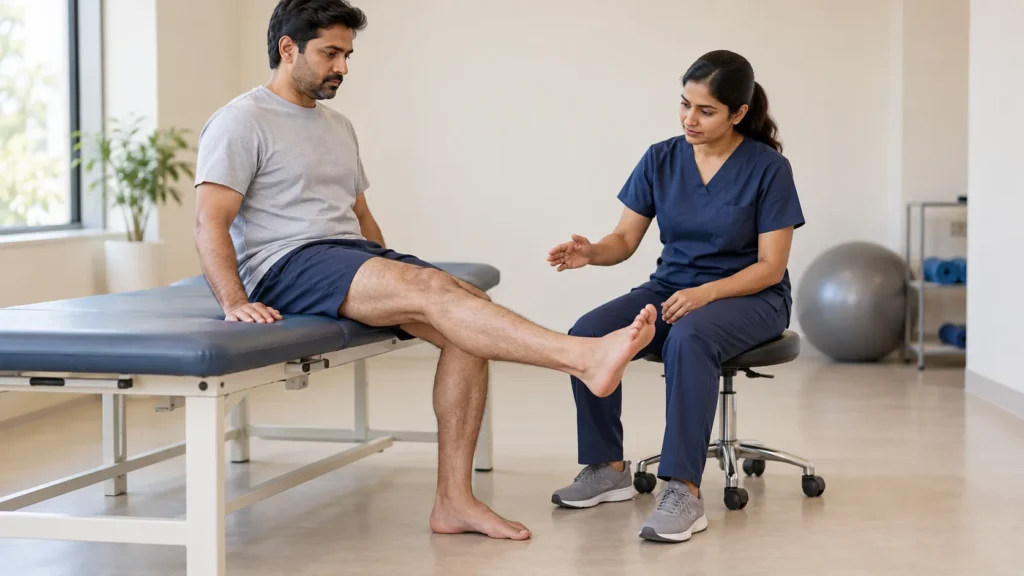
- Lengthening phase: The bone is lengthened by about 1 mm a day. A 5 cm gain takes roughly 7 weeks.
- Bone hardening (consolidation) phase: The new bone hardens. This often takes another 3 to 6 months.
- Recovery exercises: Daily physiotherapy protects joint movement and muscle strength throughout treatment.
- Return to full activity: Many patients need 9 to 12 months or longer. Nails or frames are removed in a later surgery.
For a stage-by-stage breakdown, see our limb lengthening recovery timeline.
How much height can you gain?
For one pair of bones (both thighs or both shins), a gain of 5 to 8 cm (2 to 3 inches) is common. Some centres combine thigh and shin lengthening for larger gains, but each extra bone segment adds risk and time. Our guide on how much height you can gain safely explains the limits in more detail.
Is limb lengthening safe? Risks and complications
Limb lengthening can increase height, but problems can happen during treatment and recovery. Some need only a small change in care. Others need another surgery.
A systematic review of 983 bone segments lengthened with PRECICE or Fitbone nails found about one complication for every three bones treated (34%).
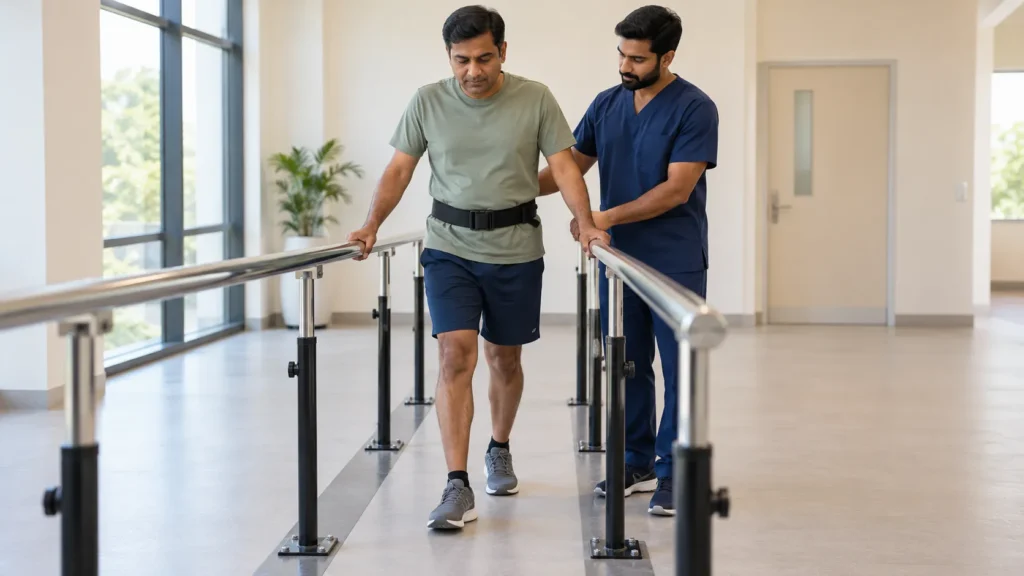
This does not mean one in three surgeries failed. In that review, 11% of segments needed only minimal treatment, 15% needed a substantial change such as an extra operation but still reached the goal, 5% did not reach the planned length, and 3% had lasting harm.
A 2023 multicentre study by Frost and colleagues of 314 nails found that 53% of patients had at least one complication, with higher risk for shin (tibia) lengthening and for patients over 30.
For cosmetic patients specifically, a 2020 systematic review of cosmetic stature lengthening reported good height gain and patient satisfaction with a low rate of major complications, while calling for clearer guidelines.
Possible problems include:
- Stiff joints that become hard to move.
- Nerve irritation, which may cause pain or tingling.
- Bone that heals slowly or does not heal properly.
- Infection.
- A lengthening device that stops working or breaks.
- New bone that bends.
- Visible scars, which vary by technique.
Ask your surgeon how they will handle these problems and who will support you during recovery. Regular check-ups and physiotherapy are an essential part of treatment.
How much does limb lengthening surgery cost in 2026?
Prices depend on the technique, the number of bones, hospital stay and aftercare. The ranges below come from prices published by clinics in 2026 and are only a guide. For a detailed Indian breakdown, see our guide to limb lengthening surgery cost in India.
| Country | Published range (approx.) |
|---|---|
| USA | $70,000 – $225,000 |
| Germany, France, Italy | €50,000 – €80,000 |
| Turkey | €25,000 – €100,000 |
| South Korea | $40,000 – $70,000 |
| India (Global Healthcare India) | ₹5 lakh – ₹15 lakh, depending on method and number of segments |
Insurance usually covers medically needed surgery, such as a large leg length difference or a bone deformity, but rarely covers lengthening done only to increase height. Ask for a written package that lists every surgery, the hospital stay, physiotherapy, X-rays and follow-up visits. Remember to include travel, accommodation and time away from work.
7 questions to ask your surgeon before limb lengthening
- How tall can I safely become, and when would you stop lengthening?
- How many patients like me have you treated, and what were their results?
- Which method is best for me, and why?
- What can go wrong, and how often do your patients need extra surgery?
- When can I walk without support, return to work and exercise again?
- Who will guide my physiotherapy and help if a problem happens after I go home?
- What is the full cost, including follow-up, physiotherapy, implant removal and treatment for any problems?
Key takeaways
- There is no single “number one” surgeon. The right choice depends on your reason for surgery, your budget and the method that suits your bones.
- Check three things first: orthopaedic qualification, the number of limb lengthening cases done each year, and the hospital’s physiotherapy and emergency support.
- Internal nails such as PRECICE avoid an external frame. LON (lengthening over nail) and Ilizarov frames are still widely used and cost less.
- Limb lengthening is not risk-free. In one large review, about 1 in 3 lengthened bone segments had some complication, and most still reached their treatment goal.
- In 2026, published clinic prices range from about ₹5 lakh in India to over $200,000 in the USA.
Conclusion
The best limb lengthening surgeon for you is someone with experience in your type of case, who explains the risks clearly, uses a method suited to your bones and works in a hospital that will support you through the months of recovery.
Shortlist two or three surgeons, ask the questions above, and compare their written plans before you decide.
Book a consultation with Dr. Sunil Saini at Global Hospital & Trauma Centre, Pataudi, Gurugram. Call +91-8505993322 or book an appointment online to discuss your case.
Medical disclaimer: This article is for general information and is not medical advice. Results and risks differ for every patient. Surgeons are listed using publicly available information; the list does not rank them or recommend one over another.
Frequently asked questions
Q. Who is the best limb lengthening surgeon in the world?
No single surgeon is best for every patient. Surgeons such as Dr. Dror Paley, Dr. S. Robert Rozbruch, Dr. Austin Fragomen and Prof. Augustin Betz are widely recognised, but the right choice depends on your condition, the method, your budget and the care team around the surgeon.
Q. Who is the best limb lengthening surgeon in India?
There is no single best choice for everyone. Compare qualifications, yearly case numbers, the methods offered and the hospital’s physiotherapy support. For patients in Delhi NCR, Dr. Sunil Saini at Global Hospital & Trauma Centre, Pataudi, Gurugram, offers Ilizarov, LON and PRECICE lengthening and is one experienced option to consider.
Q. How much height can I gain with limb lengthening surgery?
Usually 5 to 8 cm (2 to 3 inches) for one pair of bones. Some centres combine thigh and shin lengthening for larger gains, but this carries more risk and a longer recovery.
Q. How much does limb lengthening surgery cost in 2026?
Published prices range from about ₹5 lakh to ₹15 lakh at Global Healthcare India, €50,000 to €80,000 in Germany, France and Italy, and $70,000 to $225,000 in the USA. The final cost depends on the method, the number of bone segments lengthened and what the package includes. Always ask for a current written quote.
Q. Is limb lengthening surgery safe?
It is an established surgery, but it is not risk-free. The large review discussed in this guide found complications in about one in three lengthened bone segments. Most were managed and the treatment goal was still reached, but about 15% of segments needed a substantial change such as another operation. An experienced surgeon and careful follow-up lower the risk.
Q. How long is recovery after limb lengthening?
Most patients need 9 to 12 months or longer. Bone is lengthened at about 1 mm a day and then needs several months to harden. The exact timeline depends on how much length is added, the method and how well your bone heals.
Q. Which limb lengthening method is best: PRECICE, LON or Ilizarov?
No method is best for everyone. PRECICE internal nails avoid an external frame but cost more. LON uses a frame for a shorter time and costs less. The Ilizarov frame is the most versatile for infection and severe deformity but is the most demanding to live with. Your surgeon should explain why a method suits your bones.
Q. Will I walk, run and play sports like before after limb lengthening surgery?
Most people walk normally again and many return to sport, but recovery differs for each person. Physiotherapy restores strength and mobility. Avoid running or sports until your surgeon gives you the go-ahead, and be aware that some people do not return fully to their previous level.
References
- Frost MW, Rahbek O, Traerup J, Ceccotti AA, Kold S. Systematic review of complications with externally controlled motorized intramedullary bone lengthening nails (FITBONE and PRECICE) in 983 segments. Acta Orthopaedica. 2021;92(1):120–127. doi:10.1080/17453674.2020.1835321
- Frost MW, et al. Complications and risk factors of intramedullary bone lengthening nails: a retrospective multicenter cohort study of 314 FITBONE and PRECICE nails. Acta Orthopaedica. 2023. actaorthop.org/actao/article/view/8479
- Cosmetic stature lengthening: systematic review of outcomes and complications. Bone & Joint Research. 2020;9(7). doi:10.1302/2046-3758.97.BJR-2019-0379.R1
- Bulut H, Altin O, Salduz I, Salduz A. Meta-analysis of complications and functional outcomes in cosmetic limb lengthening. Journal of Orthopaedics. 2025;65:41–45. doi:10.1016/j.jor.2024.12.012
- US Food and Drug Administration. UPDATE: NuVasive Specialized Orthopedics’ Precice Devices – Letter to Health Care Providers. fda.gov
- US Food and Drug Administration. Medical Device Recall Database: Precice Max (Recall Z-0500-2025). accessdata.fda.gov
- Hospital for Special Surgery. HSS names Dr. Austin Fragomen Chief of the Limb Lengthening and Complex Reconstruction Service. January 2026. news.hss.edu