
Can exercises really increase your height? Regular physical activity supports healthy growth in children and teenagers and can help adults improve strength, flexibility and posture. However, once the growth plates in your bones have closed, exercise cannot permanently make those bones longer.

If you have been searching for exercises to increase height, you may have seen promises of growing taller in one week. This guide explains what exercise can realistically do, shares 15 activities that support a healthy body and discusses when you should speak to a doctor about growth concerns.
Can Exercise Increase Your Height?
The answer depends on your age and whether you are still growing.
For children and teenagers: Exercise is part of a healthy lifestyle. Along with good nutrition, sleep and healthcare, it supports normal development during the growing years. However, no particular sport or stretch can guarantee that a child will become taller than their natural growth potential.
For adults: Once growth plates have closed, exercises cannot permanently increase bone length. Stretching and strength exercises can still be useful because they improve flexibility, fitness and posture.
Read more about what is realistic after puberty.
What Are Growth Plates?
Growth plates are areas of developing tissue near the ends of long bones. During childhood and puberty, these areas allow bones to grow longer. When growth plates close after puberty, natural lengthening of those bones stops.
The timing is different for everyone. Some teenagers finish growing earlier than others, so age alone cannot tell you whether growth plates are still open. If there is a medical concern about growth, a doctor may review growth records and, when appropriate, recommend a bone-age X-ray.
15 Exercises & Activities to Support Healthy Growth and Posture
The following activities are helpful for fitness, flexibility, muscle strength or posture. They should not be treated as a way to permanently increase adult height. Choose activities that are comfortable for you and stop if you experience pain.
1. Walking
Walking is an easy way to stay active and support heart, muscle and bone health. Start at a comfortable pace and gradually increase the time you walk.
2. Swimming
Swimming exercises many muscle groups and supports overall fitness. It can be an enjoyable activity for children, teenagers and adults. However, swimming does not make bones longer or guarantee extra height.

3. Cycling
Cycling helps build leg strength and cardiovascular fitness. Use a cycle that fits you properly and adjust the seat to a comfortable height. Making the seat too high will not increase your height and may cause discomfort.
4. Basketball, Badminton or Other Sports
Sports encourage movement, coordination and teamwork. Children and teenagers can choose a sport they enjoy as part of an active routine. Playing basketball or jumping regularly does not guarantee that someone will grow taller.
5. Skipping
Skipping can improve fitness and coordination. Begin with short sessions and gradually increase as your fitness improves. If you have knee, ankle or other joint pain, ask a healthcare professional whether it is suitable for you.
6. Gentle Side Stretch
Stand comfortably with your feet apart. Raise one arm and gently lean towards the opposite side. Return to the centre and repeat on the other side. This can help you feel more flexible, but it does not lengthen your spine permanently.
7. Cat-Cow Stretch
Start on your hands and knees. Slowly round your back, then gently move in the opposite direction. Keep the movement comfortable and avoid pushing into pain. This exercise can help with spinal mobility.
8. Wall Standing for Posture Awareness
Stand near a wall with your head, upper back and hips comfortably aligned. Notice how it feels to stand upright without forcing your shoulders back. This simple practice can help you become more aware of your posture.
9. Sit-to-Stand
Sit on a stable chair with your feet on the floor. Lean slightly forward, stand up, then slowly sit down again. Use your hands for support if needed. This exercise strengthens the legs and hips.
10. Mountain Pose
Stand comfortably with your feet slightly apart. Lengthen through your body and, if comfortable, raise your arms overhead. This yoga pose can help you practise balance and posture awareness.
11. Chest Stretch
Stand or sit comfortably. Gently move your shoulders back and open your chest without arching your lower back. Hold briefly, then relax. This can help ease stiffness after long periods of sitting.
12. Supported Squats
Stand near a stable support with your feet comfortably apart. Bend your knees and hips as if sitting back into a chair, then return to standing. Move only as far as feels comfortable.
13. Glute Bridge
Lie on your back with your knees bent and feet on the floor. Gently lift your hips, pause briefly and lower them slowly. This exercise helps strengthen the hips and core.
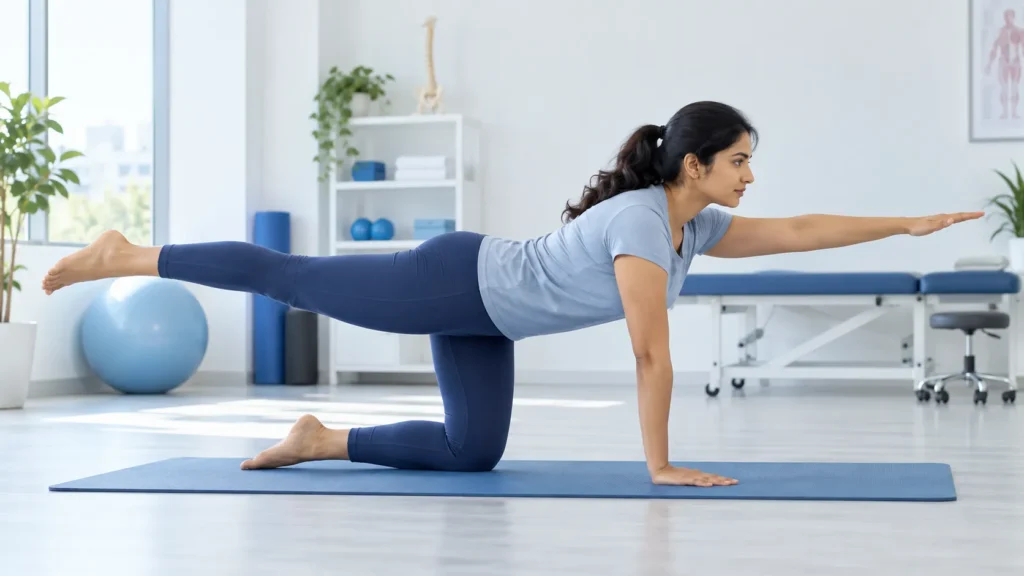
14. Bird-Dog
Start on your hands and knees. If comfortable, extend one arm and the opposite leg while keeping your body steady. Return to the starting position and repeat on the other side. This helps develop balance and core control.
15. Dancing
Dancing is an enjoyable way to improve coordination, fitness and movement. Choose a style you enjoy and move at a pace that feels comfortable.
Children and teenagers should use age-appropriate instruction and supervision for strength exercises. If you have an injury, a health condition or pain during movement, ask a doctor or physiotherapist which activities are suitable for you.
How Much Exercise Do Children and Teenagers Need?
The World Health Organization recommends that children and adolescents aged 5 to 17 get an average of at least 60 minutes of moderate-to-vigorous physical activity each day across the week. This can include play, walking, cycling, dancing or sport.
Activities that strengthen muscles and bones should also be included at least three days a week. If a child is not currently active, starting with a smaller amount and gradually increasing it is a sensible approach.
Can Hanging or Stretching Make You Taller?
Hanging and stretching do not permanently increase height after growth plates close. They can feel good and may help maintain flexibility, but they do not make the bones in your legs or spine grow longer.
Your measured height can change slightly during the day because the discs between the spinal bones are compressed during daily activity and recover when you lie down. This is a normal temporary change, not permanent growth.
Hanging may place strain on the shoulders or hands. Avoid it if it causes discomfort, and ask a healthcare professional before trying it if you have a shoulder injury or another relevant condition.
Can You Increase Your Height in One Week?
No exercise, food or supplement can guarantee a permanent height increase in one week. A person may stand more upright after improving posture, but that is different from their bones growing longer.
Be cautious of online routines that promise a fixed number of inches in a few days. Healthy growth takes place over time and depends on many factors, including genetics, nutrition, health and the stage of development.
Healthy Habits That Support Growth in Children and Teenagers
There is no single food or exercise that makes every child taller. The aim is to support normal growth and identify any medical concerns early.
- Eat a balanced diet: Include a variety of foods such as dal, beans, eggs, milk or other suitable dairy products, vegetables, fruit, whole grains and other protein sources.
- Stay active: Encourage enjoyable, age-appropriate movement and play.
- Get enough sleep: Sleep needs vary by age. A regular sleep routine supports overall health and development.
- Attend regular health checks: A paediatrician can track height and weight over time using a growth chart.
- Discuss health concerns: Long-term illness, nutritional problems or delayed puberty may need medical assessment.
Supplements and growth hormone should only be used when recommended by a qualified clinician. They are not shortcuts to extra height.
Does Better Posture Make You Taller?
Good posture can help you stand more upright and may change how tall you appear. If you tend to slouch, improving your strength, comfort and body awareness may help you use your natural height more fully.
However, there is no single perfect posture to hold all day. It is helpful to change positions regularly, stay active and choose comfortable ways to sit and stand.
Can Adults Increase Their Height After Growth Plates Close?
Exercise and supplements cannot permanently increase bone length once growth plates have closed. Limb lengthening surgery can increase bone length in selected adults, but it is a major orthopaedic procedure - not a quick alternative to exercise.
It requires careful assessment, surgery, physiotherapy, regular follow-up and a long recovery. Possible complications include infection, joint stiffness, nerve problems and delayed bone healing. Anyone considering it should discuss the benefits, limitations and risks with an experienced orthopaedic specialist.
Learn more in our limb lengthening surgery guide or read about limb lengthening treatment.
When Should You See a Doctor About Height?
Consider speaking with a paediatrician if a child appears to be growing much more slowly than expected, repeatedly moves down across growth-chart percentiles, has delayed puberty or has other concerns such as poor weight gain or frequent illness.
A doctor can review the child’s growth over time, family history, nutrition, general health and puberty. If needed, they may recommend further assessment or refer the child to a paediatric endocrinologist.
Adults should seek medical advice if they notice a significant loss of height, especially if it occurs with back pain, a fracture or a change in posture.
Final Takeaway
Exercise is valuable at every age. For children and teenagers, it supports healthy development alongside good nutrition, sleep and healthcare. For adults, it helps maintain strength, flexibility and posture, but it does not permanently increase height after growth plates close.
If you are concerned about a child’s growth or want to understand the options for an adult height concern, speak with a qualified healthcare professional. You can also read our guide to average height for men in India and average height for women in India.
Frequently Asked Questions
Q. Which exercise is best for increasing height?
No single exercise guarantees an increase in height. For children and teenagers, regular activity supports healthy development. For adults, stretching and strength exercises can improve fitness and posture, but they do not make bones longer after growth plates close.
Q. Can I increase my height after 18?
Some people may still be growing at 18, depending on their stage of development. Once growth plates have closed, natural bone growth in length stops. A doctor can assess a growth concern when necessary.
Q. Does hanging from a bar increase height?
Hanging does not permanently increase height after growth plates close. It may be a form of exercise for some people, but it should be avoided if it causes pain or places too much strain on the shoulders.
Q. Does swimming or basketball make children taller?
Swimming and basketball are healthy activities, but there is no guarantee that either will make a child taller. Height is influenced by genetics, nutrition, health and development.
Q. Can yoga increase height after puberty?
Yoga may improve flexibility, balance and posture. It cannot permanently increase bone length once growth plates have closed.
Q. Can supplements increase adult height?
No supplement has been shown to reopen closed growth plates or permanently increase adult height. Supplements may be recommended by a clinician to treat a nutritional deficiency, but they are not a height-growth shortcut.
Q. How can I check whether my child is growing normally?
A paediatrician can measure your child accurately and review their growth pattern over time on an age-appropriate growth chart. One height measurement alone usually cannot tell the full story.
Trusted Sources
- World Health Organization: Physical Activity Recommendations
- American Academy of Pediatrics: Predicting a Child’s Adult Height
- Cleveland Clinic: Does Stretching Make You Taller?
Medical disclaimer: This article is for general educational purposes. It does not replace an individual assessment by a paediatrician, endocrinologist, physiotherapist or orthopaedic specialist.