

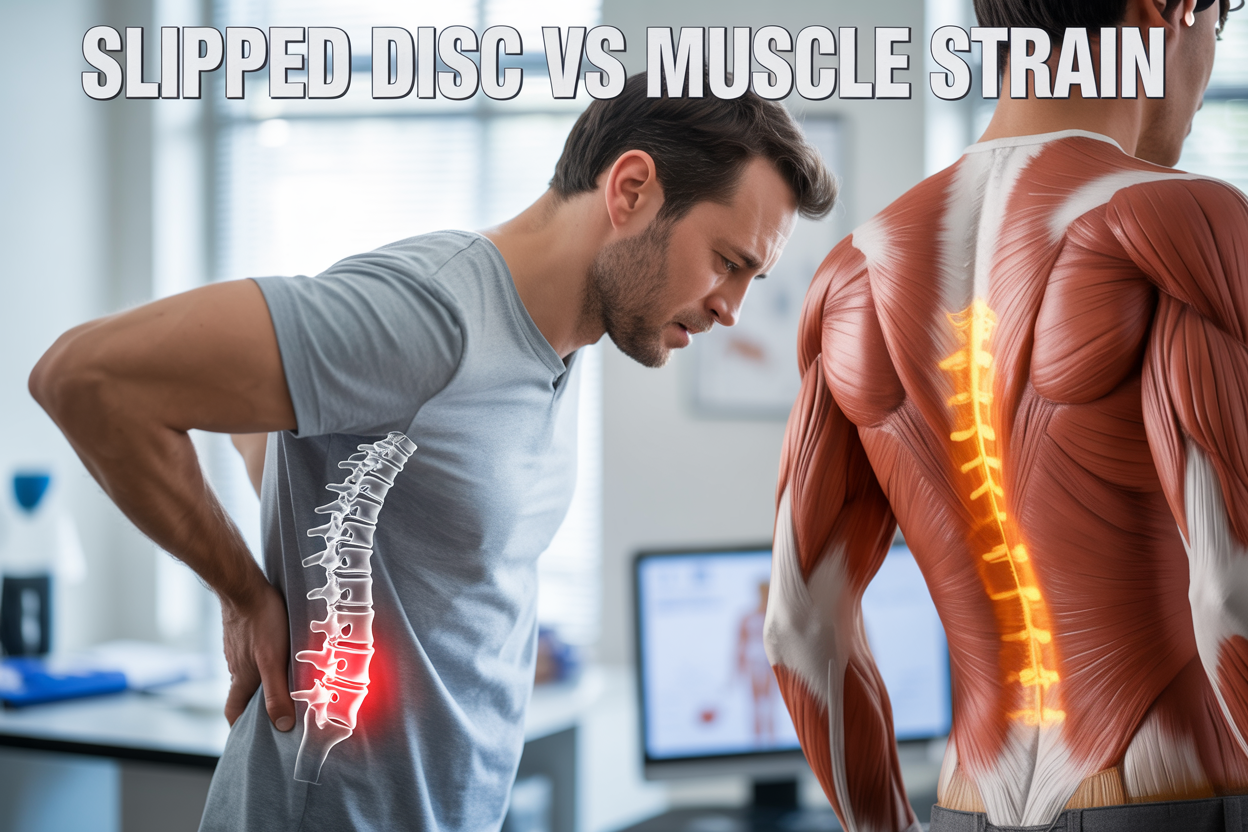
Back pain can stop you in your tracks, but figuring out whether you’re dealing with a slipped disc or muscle strain makes all the difference in getting better fast. This guide is for anyone experiencing back pain who wants to identify their condition before heading to the doctor.
You’ll learn to recognize the key warning signs that separate these two common injuries and understand how pain spreads differently through your body with each condition. We’ll also walk you through simple self-assessment tests you can do at home to get a clearer picture of what’s going on with your back.
Recognize Key Warning Signs of Each Condition

Sharp shooting pain versus dull aching sensations
Slipped disc pain typically strikes with intense, sharp, electric-like jolts that radiate down your leg or arm. This burning sensation often feels like lightning bolts shooting through your body. Muscle strain creates a deep, dull aching sensation that stays localized to the injured area. The pain feels more like a bruise or cramp that throbs consistently without the shocking quality of nerve compression.
Location patterns that reveal the true source
Disc problems follow specific nerve pathways, sending pain from your spine down your buttock, thigh, and sometimes into your foot. This follows a clear line called a dermatome. Muscle strains hurt exactly where the injury occurred – your lower back, shoulder, or neck area. The pain doesn’t travel far from the actual muscle damage. Disc pain crosses multiple body regions while muscle pain stays put.
Movement triggers that differentiate the conditions
Coughing, sneezing, or bending forward dramatically worsens disc-related pain because these actions increase spinal pressure. Sitting often becomes unbearable with a herniated disc. Muscle strains hurt most when you use the affected muscle directly – lifting, twisting, or stretching the injured area. Rest typically relieves muscle pain, while disc problems may hurt even when you’re completely still.
Timing differences in pain onset and duration
Muscle strains usually develop gradually during or immediately after physical activity. You can often pinpoint the exact moment you felt something “pull” or strain. Disc injuries can appear suddenly after a specific movement or develop slowly over days. Muscle strain pain typically peaks within 24-48 hours then gradually improves. Disc pain often fluctuates unpredictably, with good days followed by terrible ones, lasting weeks or months without proper treatment.
Understand How Pain Spreads Through Your Body

- [ ]
Nerve pathway symptoms from disc problems
When a disc herniates or bulges, it often presses against nearby nerve roots, creating a distinct pattern of symptoms that follow specific nerve pathways. This compression triggers sharp, burning, or shooting pain that travels along the affected nerve’s route. Unlike muscle strains that stay in one area, disc-related pain follows anatomical highways through your body. The pain typically starts in your spine and radiates outward in predictable patterns – down your leg if it’s a lumbar disc issue, or into your arm and shoulder for cervical disc problems.
Localized muscle tension and stiffness patterns
Muscle strains create a completely different pain signature that stays put in the injured area. The discomfort feels like deep aching, cramping, or tight knots that don’t venture far from the original injury site. Your muscles respond to strain by contracting and becoming rigid, creating localized stiffness that worsens with movement. This tension often spreads to nearby muscle groups as they compensate for the injured area, but the pain remains confined to soft tissue rather than following nerve pathways.
Radiating pain down arms or legs
Disc problems excel at sending pain on long journeys through your extremities. A herniated lumbar disc can shoot pain down your buttock, thigh, and even into your foot – a condition called sciatica. Cervical disc issues send pain down your shoulder, arm, and fingers. This radiating pain often feels electric or burning and may worsen with specific movements like coughing, sneezing, or bending forward. The pain intensity can vary dramatically throughout the day, sometimes disappearing completely before returning with vengeance.
Numbness and tingling sensations explained
When discs compress nerves, they interrupt normal nerve signals, creating numbness, tingling, or pins-and-needles sensations in specific body regions. These neurological symptoms rarely occur with simple muscle strains. The affected areas correspond directly to the compressed nerve’s territory – your thumb and index finger for certain cervical discs, or your big toe for specific lumbar disc problems. This numbness can be constant or intermittent, and may be accompanied by weakness in the affected muscles, making it difficult to grip objects or lift your foot properly.
Perform Simple Self-Assessment Tests at Home

- [ ]
Range of Motion Checks for Your Spine
Start with gentle forward bends – touch your toes slowly and note where pain strikes. Slipped discs typically cause sharp pain that shoots down your leg, while muscle strains create localized back discomfort. Try side bends next, leaning left and right with your hands on your hips. Disc problems often worsen with forward movement, whereas muscle strains hurt more during side-to-side motion. Test backward extension by placing hands on your lower back and gently arching. Muscle strains usually improve with this movement, but disc issues may intensify the radiating pain down your legs.
Pressure Point Tests to Isolate Problem Areas
Apply firm pressure along your spine using your fingertips, starting from your neck down to your tailbone. Muscle strains create tender spots that feel better with gentle massage and pressure. Disc problems show different patterns – pressing directly on the affected vertebrae often increases leg pain or numbness rather than providing relief. Check the muscles on either side of your spine by pressing firmly for 10 seconds. If the pain stays local and gradually decreases with pressure, you’re likely dealing with muscle tension. Sharp, electric-like sensations that travel away from the pressure point suggest disc involvement.
Walking and Sitting Position Evaluations
Pay attention to your comfort level during normal activities. Walk around for five minutes and notice if pain increases or decreases. Muscle strains often feel better with gentle movement and walking, while disc problems may worsen with prolonged walking or standing. Test different sitting positions – try slouching, sitting upright, and leaning back in your chair. Disc issues typically feel worse when sitting, especially in slouched positions, because this increases pressure on the discs. Muscle strains might feel better when sitting and resting the affected muscles, though certain positions could still trigger discomfort if the strained muscle is being stretched.
Know When Professional Medical Help is Essential

- [ ]
Red Flag Symptoms Requiring Immediate Attention
Certain warning signs demand urgent medical care and shouldn’t be ignored. Severe pain shooting down both legs, loss of bladder or bowel control, numbness in the groin area, or sudden weakness in both legs signals potential cauda equina syndrome – a medical emergency. High fever combined with back pain might indicate infection, while chest pain radiating to the back could suggest serious cardiovascular issues.
Progressive Weakness or Loss of Function Signs
Watch for gradual worsening of symptoms that impact daily activities. Progressive leg weakness, increasing numbness or tingling that spreads beyond the initial area, or difficulty lifting your foot while walking requires prompt evaluation. Loss of reflexes, coordination problems, or inability to perform basic movements like standing from a seated position signals nerve damage that needs immediate attention before permanent disability occurs.
Timeframe Guidelines for Seeking Treatment
Most muscle strains improve within 3-7 days with rest and basic care. Disc-related pain typically shows some improvement within 2-4 weeks. Seek medical evaluation if pain persists beyond six weeks, worsens after the first week, or doesn’t respond to conservative treatment. Don’t wait if symptoms include neurological signs like weakness, numbness, or radiating pain – these warrant evaluation within 24-48 hours.
Diagnostic Tests That Confirm Your Condition
| Test Type | Purpose | When Ordered |
|---|---|---|
| MRI | Shows disc herniation, nerve compression | Persistent symptoms >6 weeks |
| CT Scan | Reveals bone abnormalities, fractures | Trauma or structural concerns |
| X-rays | Rules out fractures, alignment issues | Initial assessment |
| EMG/NCS | Measures nerve function and damage | Suspected nerve involvement |
| Blood Tests | Checks for infection, inflammation | Fever, systemic symptoms |
Physical examination includes straight leg raise tests, reflex checks, and strength assessments. Your doctor may order imaging only after conservative treatment fails or if red flag symptoms appear. Blood work helps rule out inflammatory conditions or infections that mimic disc problems.
Apply Targeted Relief Strategies Based on Your Diagnosis

- [ ]
Immediate pain management techniques for disc issues
Ice packs during the first 48 hours reduce inflammation and numb sharp pain. Apply for 15-20 minutes every 2-3 hours. Switch to heat therapy afterward using heating pads or warm baths to relax muscle spasms. Over-the-counter NSAIDs like ibuprofen target inflammation at the source. Gentle stretches like knee-to-chest pulls and pelvic tilts can ease pressure. Sleep with a pillow between your knees to maintain spine alignment. Avoid complete bed rest – gentle movement prevents stiffness and promotes healing.
Muscle strain recovery methods that work
Heat therapy works best for muscle strains since increased blood flow speeds recovery. Warm compresses, hot showers, or heating pads for 15-20 minutes several times daily provide relief. Gentle massage with anti-inflammatory creams helps break up muscle knots. Light stretching after warming up prevents scar tissue formation. Epsom salt baths reduce muscle tension and soreness. Stay hydrated and maintain protein intake to support muscle repair. Topical pain relievers containing menthol or capsaicin offer temporary relief without systemic side effects.
Activity modifications to prevent worsening
| Disc Issues | Muscle Strains |
|---|---|
| Avoid forward bending and twisting | Skip heavy lifting until healed |
| Use proper lifting technique (squat, don’t bend) | Gradual return to normal activities |
| Take frequent breaks from sitting | Light movement every hour |
| Sleep on your side or back with support | Avoid sudden movements |
| Limit car rides over 30 minutes | Use ergonomic supports at work |
Both conditions require you to listen to your body. Sharp, shooting pain means stop immediately. Dull aches during movement are usually acceptable if they don’t worsen.
Long-term prevention strategies for each condition
For disc health: Build core strength through planks and bridges to support your spine. Practice proper posture at work with ergonomic chairs and monitor positioning. Maintain healthy body weight to reduce spinal pressure. Regular walking or swimming keeps discs hydrated and flexible. Learn proper lifting mechanics – always squat down rather than bending over.
For muscle strain prevention: Warm up before any physical activity with 5-10 minutes of light movement. Stretch major muscle groups daily, holding each stretch for 30 seconds. Gradually increase workout intensity rather than jumping into intense exercise. Stay hydrated and get adequate sleep for muscle recovery. Address muscle imbalances through targeted strengthening exercises.
Both conditions benefit from stress management since tension worsens pain. Regular exercise, adequate sleep, and maintaining flexibility through yoga or stretching routines create a strong foundation for long-term back health.

- [ ]
Back pain can really throw a wrench in your day, but knowing what you’re dealing with makes all the difference. A slipped disc typically sends shooting pain down your leg, feels worse when you cough or sneeze, and often comes with numbness or tingling. Muscle strains, on the other hand, usually stay put in one spot, feel better with gentle movement, and respond well to heat after the first day or two. The simple tests we covered – like the straight leg raise or checking if your pain changes when you move in different directions – can give you valuable clues about what’s going on.
Don’t ignore the red flags we talked about, though. If you’re dealing with severe leg pain, numbness that’s getting worse, or any bladder issues, get to a doctor right away. For everything else, start with the right treatment approach based on what you’ve figured out. Ice and rest work great for fresh muscle strains, while gentle movement and avoiding positions that trigger nerve pain help with disc issues. Your body is pretty good at healing itself when you give it what it needs, but sometimes it needs a professional’s help to get back on track.