


Lower back pain affects millions of people daily, turning simple activities like sitting at work or driving home into sources of discomfort. If you spend hours hunched over a computer, commute long distances, or find yourself constantly shifting positions to find relief, you’re dealing with one of the most common health complaints of our time.
This guide is for office workers, commuters, parents, and anyone whose daily routine involves prolonged sitting or repetitive movements that strain the lower back. You don’t need to live with constant aches—understanding the everyday causes of lower back pain is the first step toward prevention and relief.
We’ll explore how your office setup might be working against your spine health and why that comfortable car seat could actually be sabotaging your back. You’ll also discover which household activities and modern lifestyle habits are secretly weakening your core and putting extra stress on your lower back muscles.
How Poor Office Ergonomics Destroys Your Spine

- [ ]
Why Standard Office Chairs Fail Your Lower Back
Most office chairs lack proper lumbar support, forcing your spine into unnatural positions for hours. The seat depth pushes your lower back away from support, while cheap cushioning compresses quickly, leaving you sitting on hard surfaces. Standard chairs encourage slouching, placing excessive pressure on your L4-L5 vertebrae and surrounding muscles.
The Hidden Dangers of Desk Height and Monitor Positioning
Your desk height determines whether you hunch forward or strain your shoulders throughout the day. Monitors positioned too low force neck flexion, creating a domino effect of spinal misalignment down to your lower back. Arms reaching too high or low for keyboards create shoulder tension that radiates downward, while poor mouse positioning twists your spine subtly but consistently.
How Prolonged Sitting Compresses Your Spinal Discs
Sitting increases disc pressure by 40% compared to standing, with poor posture amplifying this to 85% more pressure. Your intervertebral discs lose height throughout the day as fluid gets squeezed out, reducing their shock-absorbing capacity. Hip flexors tighten from constant flexion, pulling on your lumbar spine and creating anterior pelvic tilt that strains your lower back muscles.
Simple Workspace Adjustments That Prevent Pain
Position your monitor at eye level to maintain neutral neck alignment, and ensure your feet rest flat on the floor with knees at 90 degrees. Set your desk height so your elbows bend at 90 degrees when typing. Use a lumbar support pillow or adjust your chair’s built-in support to maintain your spine’s natural curve. Take micro-breaks every 30 minutes to stand and walk, allowing your discs to rehydrate and your muscles to reset.
Essential Ergonomic Setup Checklist:
- Monitor top at or slightly below eye level
- Chair back supports natural lumbar curve
- Feet flat on floor or footrest
- Keyboard and mouse at elbow height
- Document holder at same level as screen
- Phone headset for frequent calls
Quick Desk Exercises:
| Exercise | Duration | Benefit |
|---|---|---|
| Seated spinal twist | 30 seconds each side | Relieves disc pressure |
| Shoulder blade squeezes | 10 repetitions | Counters forward head posture |
| Hip flexor stretches | 30 seconds each leg | Reduces lumbar tension |
| Standing back extensions | 10 repetitions | Reverses flexion stress |
Your Car Seat is Sabotaging Your Back Health
- [ ]
Why Most Car Seats Create Unnatural Spinal Curves
Most car seats push your spine into an unnatural C-shape that fights against your body’s natural lumbar curve. The bucket-style design forces your pelvis to tilt backward, flattening the essential arch in your lower back. This position compresses spinal discs and strains supporting muscles, creating a perfect recipe for chronic pain during even short drives.
How Long Commutes Amplify Lower Back Stress
Extended sitting time multiplies the damage from poor car seat design. Your spine bears 40% more pressure while sitting compared to standing, and this pressure increases dramatically during long commutes. Blood flow to spinal tissues decreases after just 20 minutes of static sitting, while muscle fatigue sets in and your body compensates with harmful movement patterns.
The Impact of Poor Seat Positioning on Your Posture
Incorrect seat height, distance, and backrest angle create a domino effect of postural problems. When your seat sits too low, your knees rise above hip level, tilting your pelvis and rounding your lower back. Sitting too far from pedals forces you to lean forward and crane your neck, while improper backrest angles eliminate crucial lumbar support your spine desperately needs.
Household Activities That Secretly Damage Your Lower Back

- [ ]
Why Improper Lifting Technique Causes Instant Injury
Your back becomes vulnerable the moment you lift incorrectly. Bending from your waist instead of your knees puts enormous pressure on your lumbar discs – up to 400% more force than standing upright. When you round your spine while picking up that laundry basket or bag of groceries, you’re essentially squeezing your spinal discs like jelly donuts, pushing the inner material toward your nerve roots. The “lift with your legs” advice isn’t just workplace safety jargon – it’s biomechanical science that prevents herniated discs and muscle strains that can sideline you for weeks.
How Everyday Bending and Twisting Movements Harm Your Spine
Reaching into the back seat of your car, loading the dishwasher, or grabbing something from a high shelf creates dangerous spinal combinations. Your vertebrae hate simultaneous bending and twisting movements because they stretch ligaments beyond their natural limits and create uneven disc compression. That innocent motion of turning while bent over to pick up toys from the floor generates rotational stress that accumulates over time. Professional athletes warm up extensively before similar movements, yet we perform dozens of these risky motions daily without preparation. The result? Gradual wear that eventually leads to sudden, debilitating pain episodes.
The Surprising Back Pain Risks of Common Cleaning Tasks
Vacuuming ranks as one of the worst household activities for your spine. The forward-leaning posture combined with the pushing and pulling motion creates sustained muscle tension and compresses your lower back joints. Mopping floors forces you into prolonged flexion while adding rotational stress as you wring out the mop. Even making beds becomes problematic when you lean across mattresses, hyperextending your spine in awkward angles. Here’s what makes these tasks particularly dangerous:
- Prolonged awkward positioning – Your muscles fatigue quickly in sustained bent positions
- Repetitive stress patterns – Similar movements repeated without breaks create cumulative damage
- Poor tool ergonomics – Most cleaning equipment wasn’t designed with spinal health in mind
- Lack of movement variety – Staying in one position too long stiffens joints and weakens stabilizing muscles
How Poor Sleep Positions Worsen Daytime Back Problems
Your sleeping position either heals or harms your spine for eight hours straight. Stomach sleeping forces your neck into extreme rotation while creating an unnatural arch in your lower back. Side sleeping without proper pillow support between your knees allows your top leg to pull your pelvis out of alignment, twisting your spine throughout the night. Even back sleepers can damage their spines by using too many pillows, which pushes the neck forward and flattens the natural lumbar curve. Poor sleep positions prevent your discs from rehydrating properly – they need neutral spinal alignment to absorb fluid and nutrients during rest periods.
Modern Lifestyle Habits That Weaken Your Core

- [ ]
How Sedentary Behavior Leads to Muscle Imbalances
Sitting for hours creates a perfect storm of muscular dysfunction that directly attacks your spine’s stability. Your hip flexors tighten while your glutes essentially “turn off,” creating what experts call lower crossed syndrome. This imbalance forces your lower back muscles to overcompensate, leading to chronic tension and pain. When your core muscles weaken from disuse, your spine loses its primary support system, making every movement a potential injury risk.
Why Lack of Regular Movement Creates Chronic Stiffness
Your body literally adapts to whatever position you spend most time in, and for most people, that’s hunched over a desk or steering wheel. Without regular movement breaks, your fascia—the connective tissue surrounding muscles—begins to stick together like plastic wrap left in the sun. This creates restrictions that pull on your spine from multiple directions. Even simple tasks like picking up groceries become painful when your joints haven’t moved through their full range of motion in hours or days.
The Role of Weight Gain in Increasing Back Pain
Extra pounds don’t just add stress to your joints—they fundamentally change how your spine functions. Every additional pound around your midsection creates roughly five pounds of pressure on your lower back discs. Weight gain often concentrates in the belly area, pulling your center of gravity forward and forcing your back muscles to work overtime just to keep you upright. This constant strain wears down your spinal structures faster than normal aging would, creating a cycle where pain leads to less activity, which leads to more weight gain.
How Stress and Tension Manifest as Physical Back Pain
Your brain doesn’t distinguish between emotional stress and physical threat—both trigger the same muscle-tightening response that helped our ancestors survive dangerous situations. Chronic stress keeps your muscles in a constant state of readiness, particularly in your neck, shoulders, and lower back. This persistent tension restricts blood flow to your spinal muscles, creating trigger points and referred pain patterns. When you’re stressed, you also tend to breathe more shallowly, reducing oxygen to your core muscles and making them less effective at supporting your spine.
Warning Signs Your Daily Routine is Harming Your Back
- [ ]
Early Symptoms You Should Never Ignore
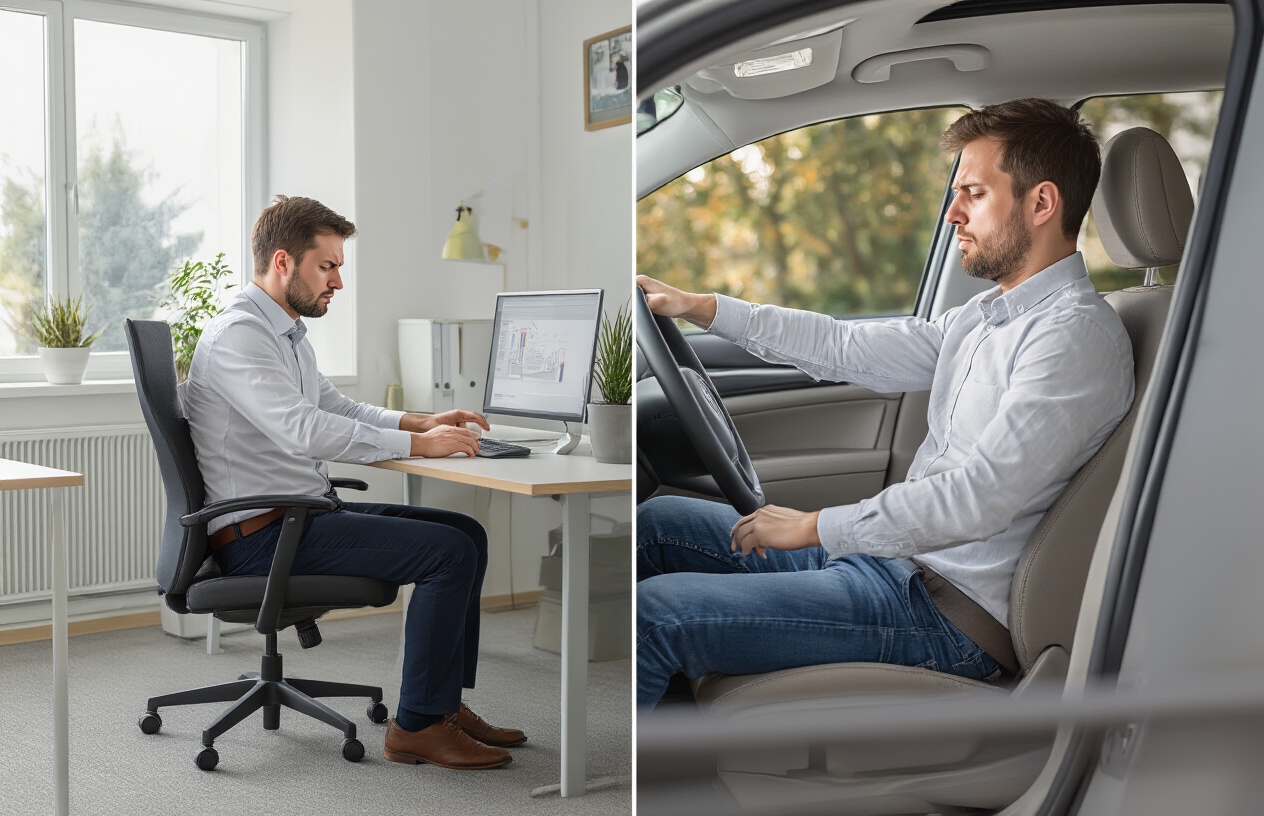
Stiffness when getting out of bed, sharp pain when bending over, or that nagging ache after sitting for hours – these aren’t just normal parts of aging. Morning back stiffness that lasts more than 30 minutes signals inflammation in your spine. Sharp, shooting pain down your leg could mean nerve compression. Even subtle signs like needing to stretch constantly, feeling unsteady when standing, or experiencing muscle spasms deserve attention. Your body sends these warning signals long before major damage occurs, so don’t brush them off as temporary discomfort.
Global Healthcare India treats lower back pain with advanced non-surgical methods
Global Healthcare India treats lower back pain with advanced non-surgical methods that provide long-lasting relief and help restore spinal function itself. These therapies further aim to give patients complete recovery without surgery. Basically, lower back pain happens when your disc bulges, muscles get tight, nerves get pressed, ligaments stretch too much, or the same wear and tear from getting older. Moreover, our doctors actually find the exact problem first through proper checking, then definitely give targeted treatments that are less invasive instead of jumping to surgery. As per the treatment plan, DSCB injections, Ozone therapy, nerve blocks, healing injections, and custom physiotherapy help reduce swelling and strengthen the lower back. Regarding nerve pressure, these treatments provide relief and correct spine problems. These treatments actually give quick relief and better movement, and they definitely provide lasting stability without staying in hospital, getting scars, or facing surgery problems.
Basically, our spine treatment without surgery is the same as what Dr. handles. We are seeing Sunil Saini as a well-known doctor who only treats difficult back pain problems with great skill and knowledge. Under his leadership, Global Healthcare India has actually treated more than 15,000 patients without any surgery, and it has definitely become a trusted place for safe back pain treatment. We are seeing real patient stories and recovery cases on our YouTube channel Global Healthcare India only, where you can explore the powerful results of our treatments.
How to Recognize Postural Problems Before They Worsen
Your reflection tells the whole story. Stand sideways in front of a mirror – your ears should align over your shoulders, shoulders over hips. Forward head posture, rounded shoulders, or an exaggerated lower back curve all spell trouble. Check if one shoulder sits higher than the other, or if your hips appear uneven. Watch how you walk – do you favor one side? Notice if your shoes wear unevenly, which reveals compensation patterns. Take photos from different angles monthly to track changes. These visual cues catch problems before pain forces you to pay attention.
When Occasional Discomfort Becomes Chronic Pain
The transition from occasional twinges to chronic pain happens gradually, making it easy to miss. Pain that persists for more than three months, regardless of intensity, qualifies as chronic. Red flags include pain that wakes you up at night, stiffness that gets worse with rest, or discomfort that spreads to new areas. When you start planning your day around avoiding certain movements, or when simple tasks like putting on socks become challenging, you’ve crossed into chronic territory. Don’t wait for unbearable pain – early intervention prevents permanent damage and stops the cycle of compensation that makes everything worse.
- [ ]
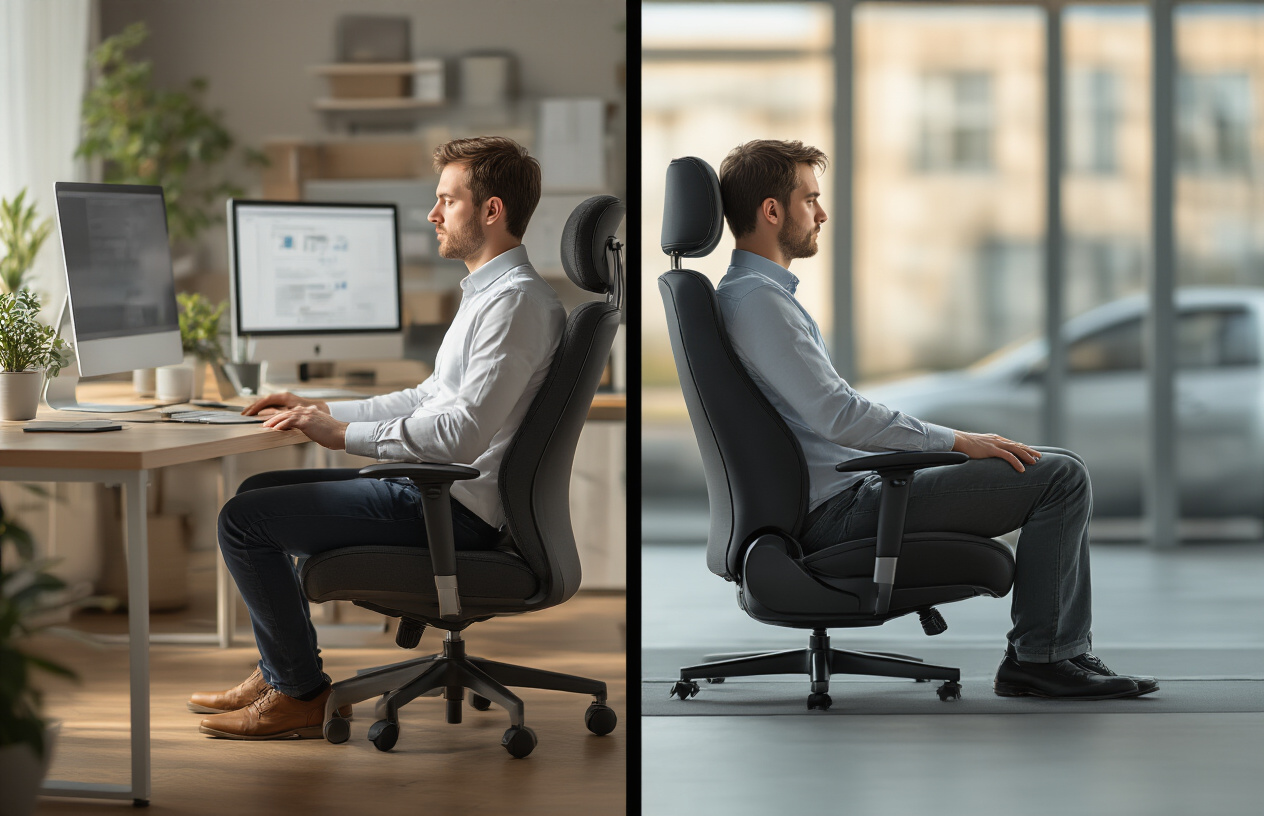
Lower back pain doesn’t just happen overnight – it builds up through the small choices we make every day. From slouching in poorly adjusted office chairs to driving with seats that force us into awkward positions, our modern lifestyle constantly puts stress on our spine. Even simple household tasks like lifting groceries or bending to load the dishwasher can add up to serious problems when we’re not paying attention to our form.
The good news is that most of these issues are completely preventable. Start by adjusting your workspace and car seat to support your natural spine curve, and pay attention to how you move during everyday activities. Your back is sending you signals through stiffness, aches, and fatigue – listen to these warning signs before they turn into chronic pain. Small changes in how you sit, stand, and move can make a huge difference in how you feel at the end of each day.