

Connect With Us!

Age-related changes
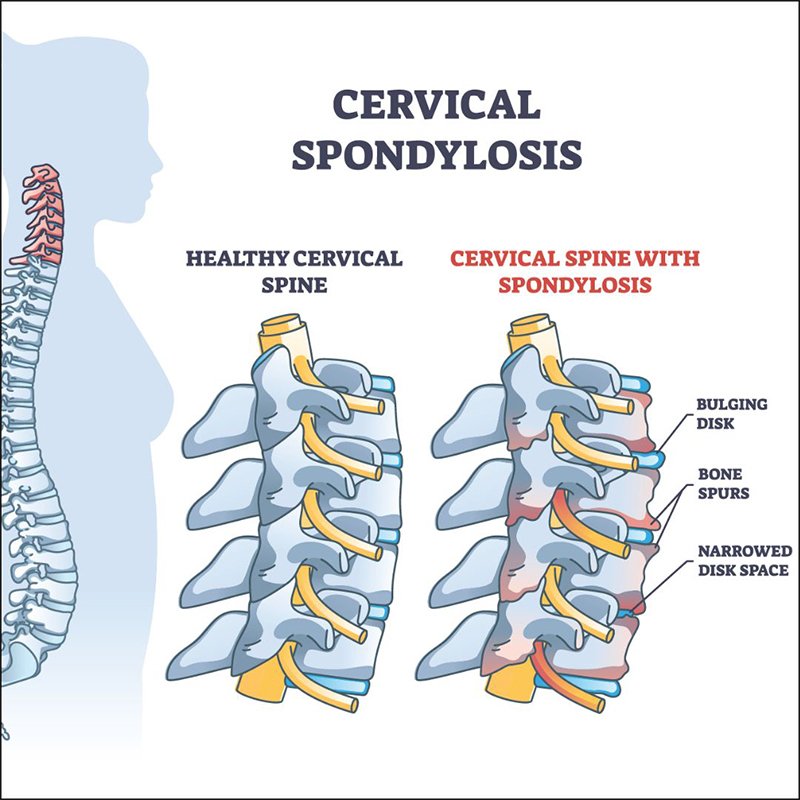
Over time, the spinal discs lose water content and elasticity, leading to decreased disc height and increased susceptibility to degenerative changes.

Repetitive stress
Activities or occupations that involve repetitive movements or sustained postures, such as computer work or heavy lifting, can accelerate the degenerative process in the cervical spine.

Neck injuries
Traumatic injuries, such as whiplash from car accidents or sports-related injuries, can damage the cervical spine and increase the risk of developing Cervical spondylosis.

Genetic factors
Some individuals may have a genetic predisposition to developing cervical spondylosis, especially if they have a family history of spinal conditions.
- Neck pain and stiffness, which may worsen with movement or prolonged sitting or standing.
- Radiating pain or numbness that extends from the neck into the shoulders, arms, or hands.
- Muscle weakness or loss of coordination in the arms or hands.
- Headaches, especially at the base of the skull or behind the eyes.
- Tingling sensations or "pins and needles" in the arms or hands.